Comfort decides whether hearing protection works because a plug only helps while it’s in your ear. A NIOSH review of the research calls comfort probably the most important factor in whether people accept their protection and keep wearing it, and discomfort is one of the top reasons people take it out. A soft, well-fitted plug that suits your noise is the one you’ll forget you’re wearing.
Quick answer
- The short version: protection you take out can’t protect you, so comfort and fit come first.
- Top reasons people stop wearing protection: discomfort and not being able to communicate.
- What makes a plug comfortable: a soft feel, gentle pressure, a shape that suits your canal, and enough hearing to stay connected.
- Don’t overdo it: NIOSH suggests aiming for about 75 to 85 dBA at the ear, not total silence.
- Big Ear tie-in: plugs made from your ear impressions in soft platinum-cure silicone, with filtered and solid options.
Why does comfort matter so much for hearing protection?
Because hearing protection works by the minute. A plug that blocks a lot of noise but comes out after twenty minutes protects you for twenty minutes.
NIOSH researcher Rickie Davis reviewed the science in a 2008 paper, What do we know about hearing protector comfort? His summary line is one we’d happily frame on the shop wall: “The most effective hearing protector is the one that is worn consistently and correctly.” The paper’s abstract names comfort as probably the most important factor in long-term acceptance and effective wear.
NIOSH’s page Provide Hearing Protection says much the same in fewer words: comfort is key to consistent use, and because comfort is personal, no single protector suits everyone.
Why do people take their earplugs out?
The Davis review found two reasons come up most often. One is discomfort. The other is not being able to communicate.
Discomfort can mean a lot of things. A plug might press on one spot, feel too hard, work loose when you talk or chew, or get warm after a few hours. Any of those can turn a good intention into a plug in your pocket.
Communication is the sneaky one. If you can’t hear a coworker, a bandmate or your family, it’s natural to pull one side out to listen. Then the noise comes right back in.
What makes an earplug comfortable?
The Davis review summarizes earlier research on how people describe a comfortable earplug. Plugs that felt soft rather than hard, smooth rather than rough, loose rather than tight, and shallow rather than deep tended to rate better, along with rounded shapes. We’ve added a couple of everyday factors from NIOSH to the table below:
| Comfort factor | What you notice | What helps |
|---|---|---|
| Softness | A hard plug can feel like a pebble after a while | A softer material, especially for long wear or sleep |
| Pressure | Sore spots, or a plug that slowly backs out | A shape that follows your own canal, with even contact |
| Depth | A plug that feels pushed in too far | A plug that sits where it should, the same way every time |
| Heat | Warm, sweaty ears on long, hot days | Earplugs rather than heavier earmuffs for long wear (NIOSH) |
| Hearing the world | Feeling cut off from voices around you | Just enough reduction, or a filter that keeps speech clearer |
On that heat point, NIOSH notes that earplugs are often more comfortable than earmuffs for long periods or in hot environments, since earmuffs are heavier. Earmuffs still have their place, and lots of people keep a pair handy for quick jobs.
Can hearing protection block too much?
It can, and that affects comfort in a quieter way. NIOSH suggests choosing protection with just enough reduction to bring your exposure to about 75 to 85 dBA. If a protector blocks far more than you need, you may feel less aware of your surroundings, and NIOSH says people may then remove it to hear properly.
For a sense of scale, the NIDCD says long or repeated exposure at or above 85 dBA can cause hearing loss, while sounds at or below 70 dBA are unlikely to, even after long exposure. So the goal isn’t silence. It’s a safer level you can live with.
NIOSH also describes flat attenuation protectors, sometimes called musicians’ earplugs. They turn sound down evenly across pitches, so voices and music sound more like themselves, only quieter.
Does fit affect comfort and protection at the same time?
Yes, and that’s the happy part. A plug that fits well tends to feel better and seal better. NIOSH’s bulletin Measuring How Well Earplugs Work says hearing protection often falls short because of poor fit, and that real-world protection varies with ear canal size and shape.
That’s why we’re such fans of fit. When a plug matches your canal, there’s less pressure on any one spot and less reason to push it in harder or fidget with it. Our post on custom earplugs vs foam goes deeper on fit, and has kind words for foam too, because it’s a fine backup.
How does Big Ear make hearing protection comfortable?
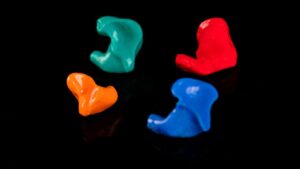
We build every pair by hand in the USA from impressions of your own ears. Then we match the material and the filter to how you’ll wear it.
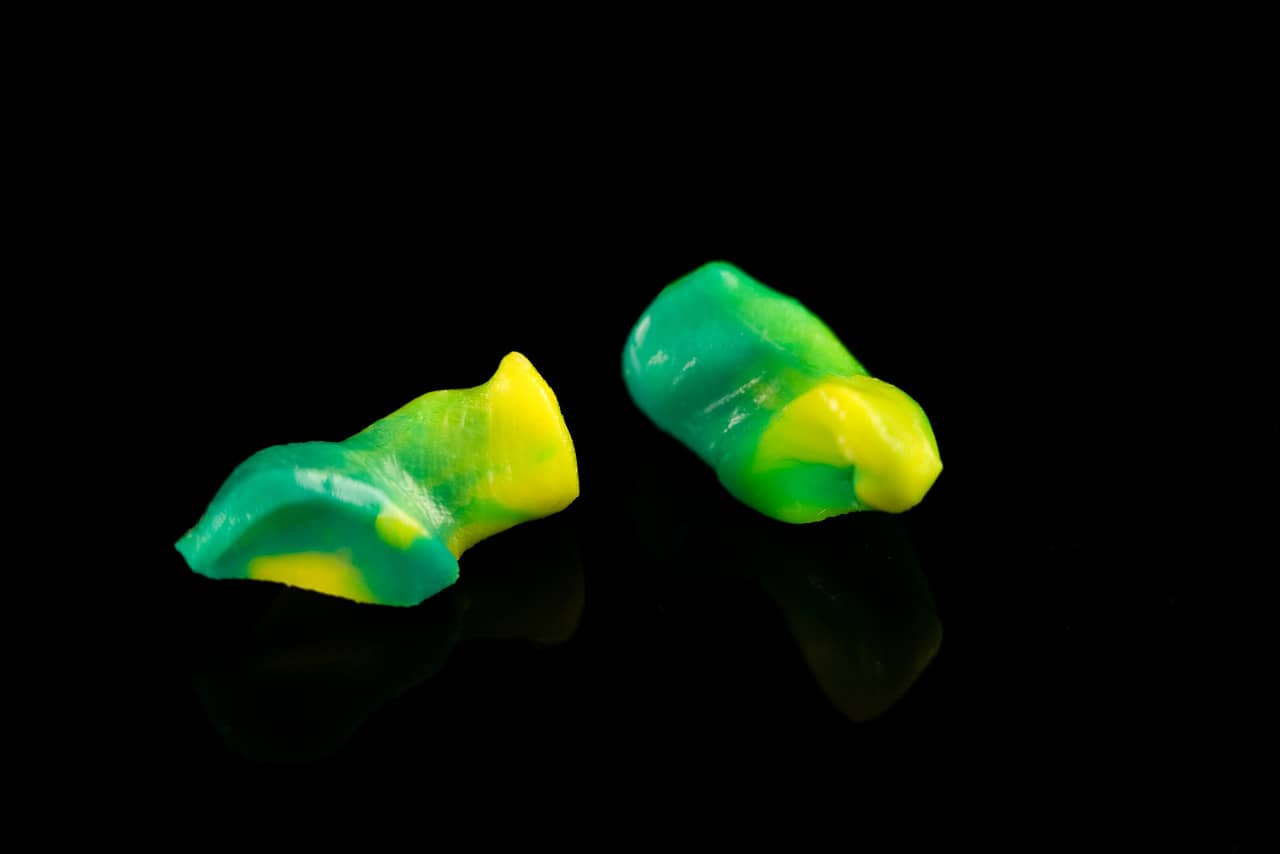
For long wear and sleep, Full Stop Super-Soft ($168.95) uses platinum-cure silicone at Shore A 25, the softest in our solid line. It’s hypoallergenic and antibacterial, comes in any color or swirl, and carries an NRR of 32 dB. Adults and kids can both wear it. If sleep is your main goal, our sleeping earplugs page has more.
If you need to hear people while the noise comes down, The One is built for that. Every pair has a non-linear canal filter, plus interchangeable flat filters of 9, 15, 20, 25 or 30 dB that swap in seconds with no new mold. It’s rated NRR 25 dB with one filter installed. We suggest 25 or 30 dB for firearms, motorcycles, tunnel skydiving, around aircraft and marching band, and 9 to 20 dB for quieter settings. Kits run Standard $224.95 (one filter set), Select $299.95 (two) and Premium $574.95 (all five, plus the hole plug, solid plugs, tactical piece and a case). Our filter guide helps you pick.
For very loud, high-impact work, the Guardian Vanquisher ($179.95) uses a firmer, semi-soft Shore A 45 silicone with an NRR of 37 dB.
And if something doesn’t feel right, our 30-Day Fit Warranty means you tell us within 30 days of delivery and we’ll make it right.
Frequently asked questions
Should custom earplugs ever hurt?
No. They may feel new for a little while, but they shouldn’t hurt. If you have ear pain, ear tubes, recent ear surgery, or new or worsening ringing in your ears, please see a doctor or audiologist before wearing any earplug.
Which is softer, Super-Soft or The One?
Super-Soft is softer: Shore A 25, compared with Shore A 35 for The One. On the Shore A scale, a lower number means a softer material.
How long do custom earplugs stay comfortable?
NIOSH notes that custom earplugs cost more at the start but are more durable and last longer than formable or preformed ones. Ears can change, though. A big weight change or 7 to 10 years can mean it’s time for fresh impressions, and we keep yours on file for up to ten years.
Can I wear filtered plugs all day?
The One is made from your ear impressions in Shore A 35 silicone, so it’s shaped for long wear. Pick the filter that brings your noise down to a comfortable level without cutting you off, and switch filters as your day changes.
Ready for a pair you’ll forget you’re wearing?
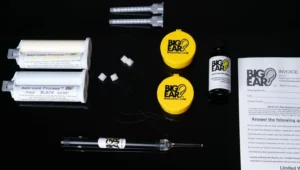
Order your pair and we’ll send a free Home Impression Kit within 2 to 3 business days. With a helper and our guided video, impressions take about 10 to 15 minutes, and return postage is paid. If an impression can’t be used, we send a second kit free. We build your plugs in 40 business days from the day your impressions reach our lab, and shipping on your order is $10.
Not sure where to start? Try Find my pair, or give us a call at (719) 271-4528. We’re happy to help you find the comfy one.
Sources
- Davis, R.R., What do we know about hearing protector comfort? Noise & Health, Vol. 10, No. 40, 2008, pp. 83–89 (CDC Stacks)
- NIOSH, Provide Hearing Protection (reviewed 31 Jan 2024)
- NIOSH, Measuring How Well Earplugs Work (Publication 2015-181)
- NIDCD, Noise-Induced Hearing Loss (updated 16 Apr 2025)